

Making Furniture with Discarded Oil Drums
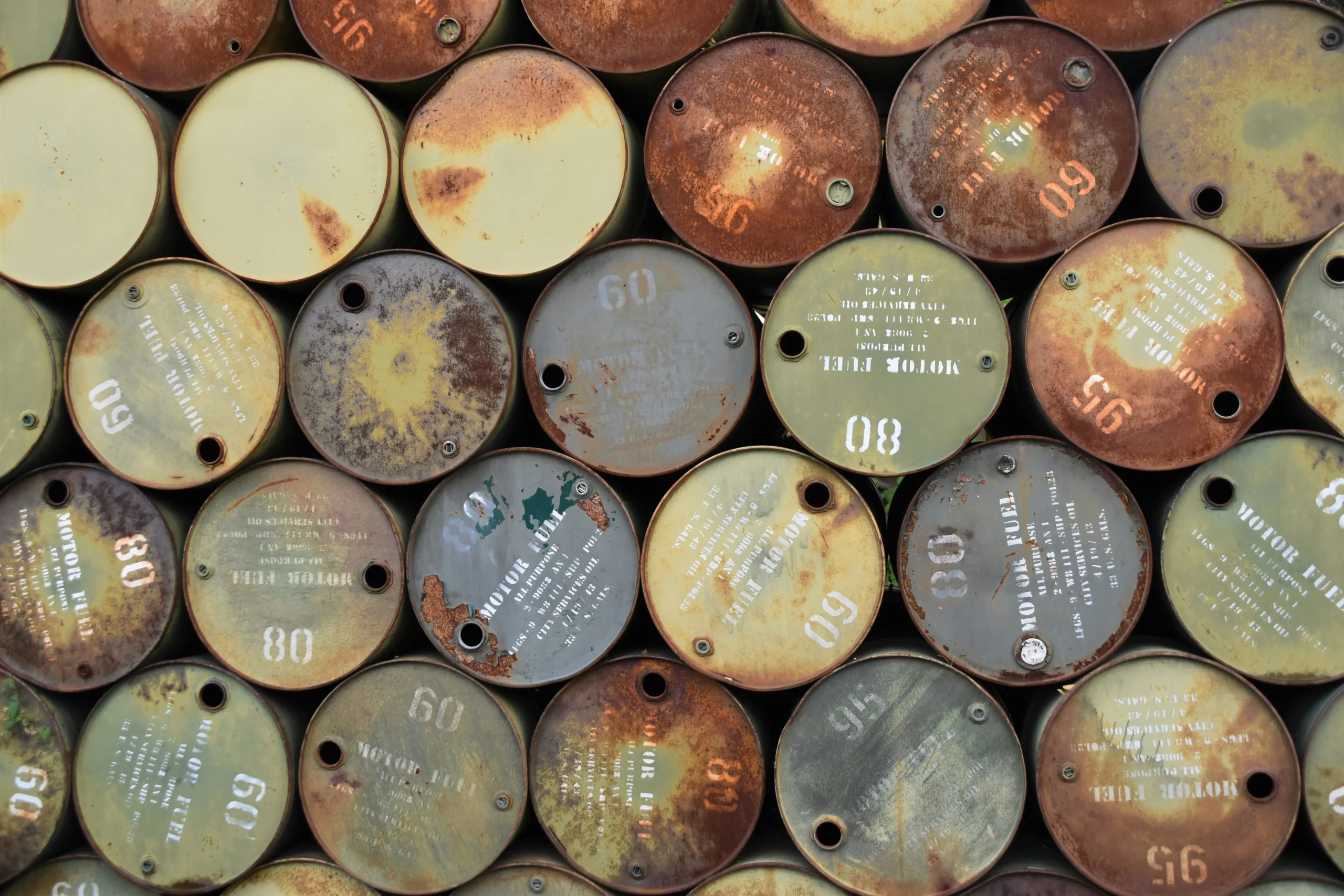
We started with oil drums not because they were fashionable, but because they were everywhere. Outside factories, behind garages, near scrap yards, stacked one inside another like leftovers of industrial India. Thick steel, heavy, scratched, stained with oil and rust. No one looked at them twice. Scrap dealers saw weight. Municipal workers saw waste. We saw material that refused to disappear.
The first drum we cut was not elegant. The blade jammed. Sparks flew unevenly. The smell of old oil mixed with burnt metal and hung in the air longer than expected. There was no design pinned to a board. We were only trying to understand the material. How thick was the steel. How much force it resisted. Where it bent easily and where it fought back. Before thinking about furniture, we had to learn how an oil drum behaves once it stops being a container.
Why discarded oil drums are difficult to recycle
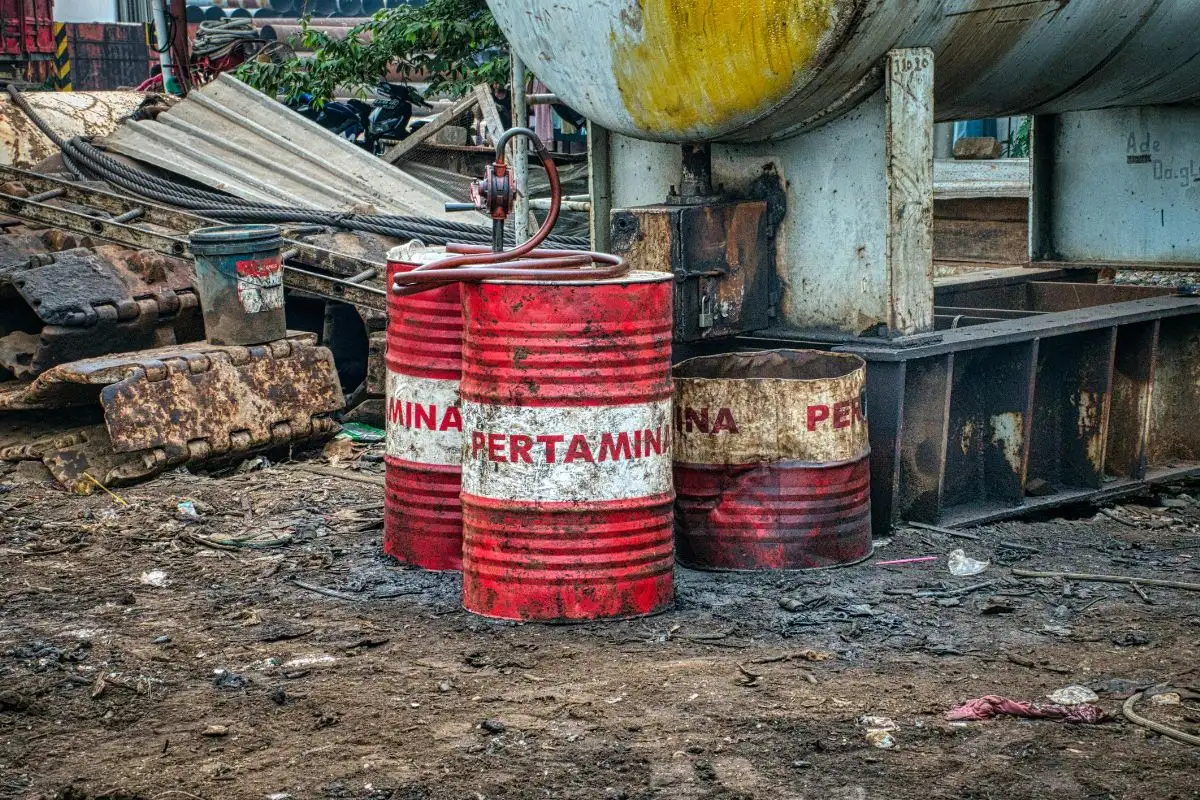
Discarded oil drums are designed to survive abuse. They are made to be rolled, dropped, stored outdoors, filled and emptied repeatedly. That strength is precisely why they become a problem after use. They do not break down easily. They sit in landfills for decades. Recycling them through melting is expensive and energy heavy. Reuse, however, asks for skill instead of fuel. It asks for hands instead of machines.
When we began working with this material, the question was not sustainability. It was livelihood. Who could work with this steel. What kind of skill would be required. Could this work be learned by someone without formal training. Could it be repeated safely. Could it earn steady income. Those questions shaped every decision that followed.
Learning to work with oil drum steel
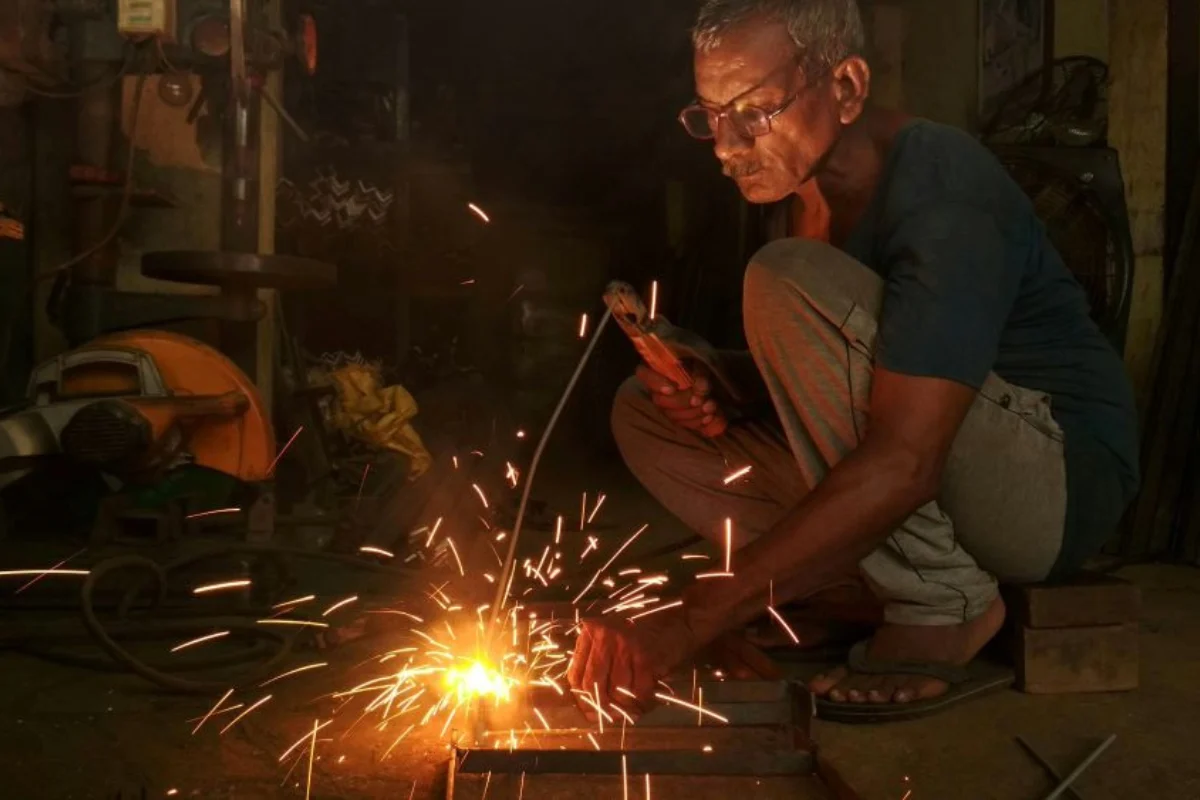
Oil drum furniture is not delicate craft. It is hard, physical, noisy work. Cutting, grinding, bending, welding. Sparks on skin. Vibrations in the wrist. The material does not forgive mistakes easily. That immediately shaped who could do the work and how we structured it. We could not romanticise it. Safety came first. Gloves, masks, training time. Slowing down production until hands learned the rhythm.
Most people we trained had never worked with metal before. Some came from waste picking. Some from daily wage construction work. Some from communities where income stops without warning. The oil drum became a teacher. It taught precision. A wrong cut meant wasted effort. A weak weld meant a failed chair. Over time, people began to read the drum. They learned where to cut to reduce effort. How to use the curve instead of fighting it. How to turn an industrial scar into a usable surface.
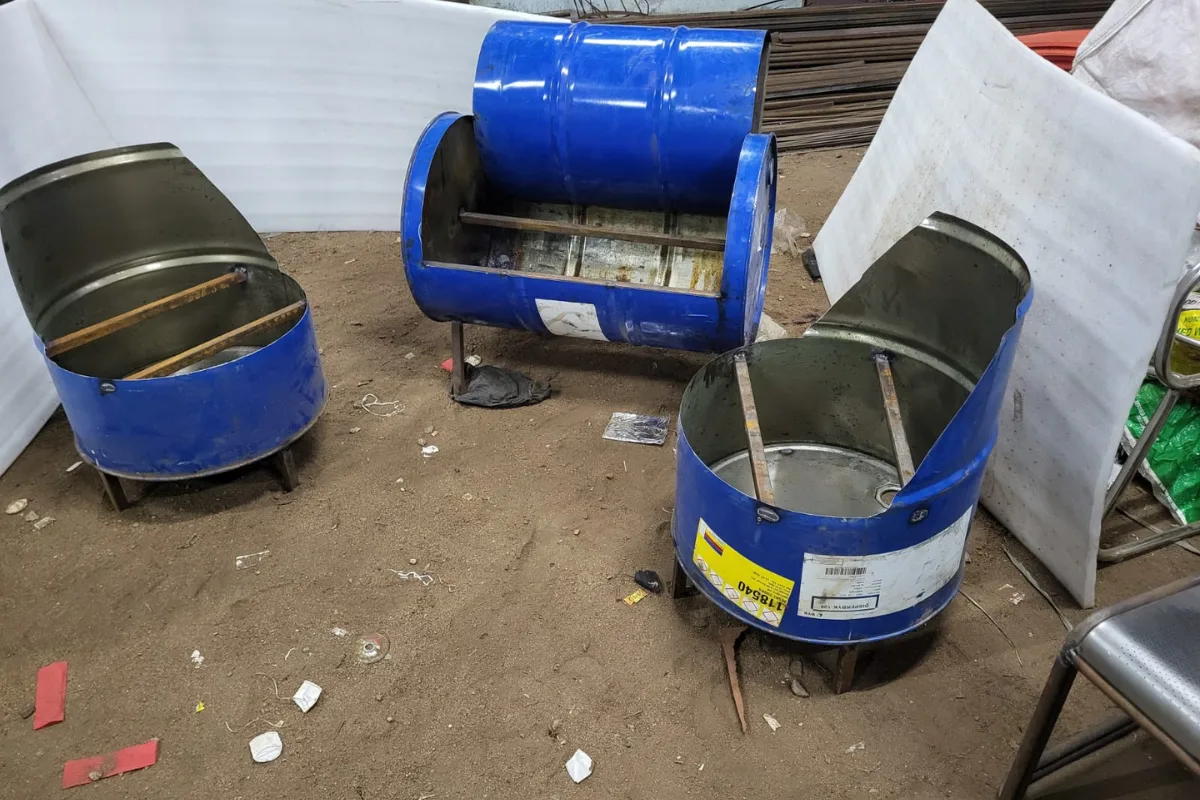
The furniture itself evolved slowly. Stools came first. Simple and low risk. Then side tables. Then chairs. Each product taught us something new about balance, load, and comfort. Oil drums are cylindrical by default. Furniture demands flatness and stability. Learning to reconcile the two took months. Often a product would look strong but fail underweight. Those failures were expensive but necessary. They trained judgement and restraint.
Making furniture from discarded oil drums
What makes oil drum furniture different from factory made metal furniture is the process. Nothing is standardised at the start. Each drum carries a different history. Different dents. Different thickness. Different levels of rust. Workers cannot operate on autopilot. They must assess each piece before starting. This keeps the work skill based, not repetitive labour. That distinction matters for livelihoods. Skill grows value. Repetition only grows speed.
Income from this work does not come overnight. In the beginning, productivity is low. One person may finish only part of a product in a day. That is why we break the process into stages. Cutting, shaping, welding, finishing. Each stage becomes a learnable unit of work. People earn while they learn. Over time, individuals move across stages, increasing both responsibility and earning capacity.
Skills required to work with heavy discarded materials
Finishing is where discarded material visibly transforms. After welding, the drum still looks like waste. Paint changes perception. Not glossy or decorative, but protective. We use finishes that seal the metal and extend life. This is not cosmetic sustainability. It is practical durability. Furniture must survive years of use. Otherwise reuse becomes another form of waste creation.
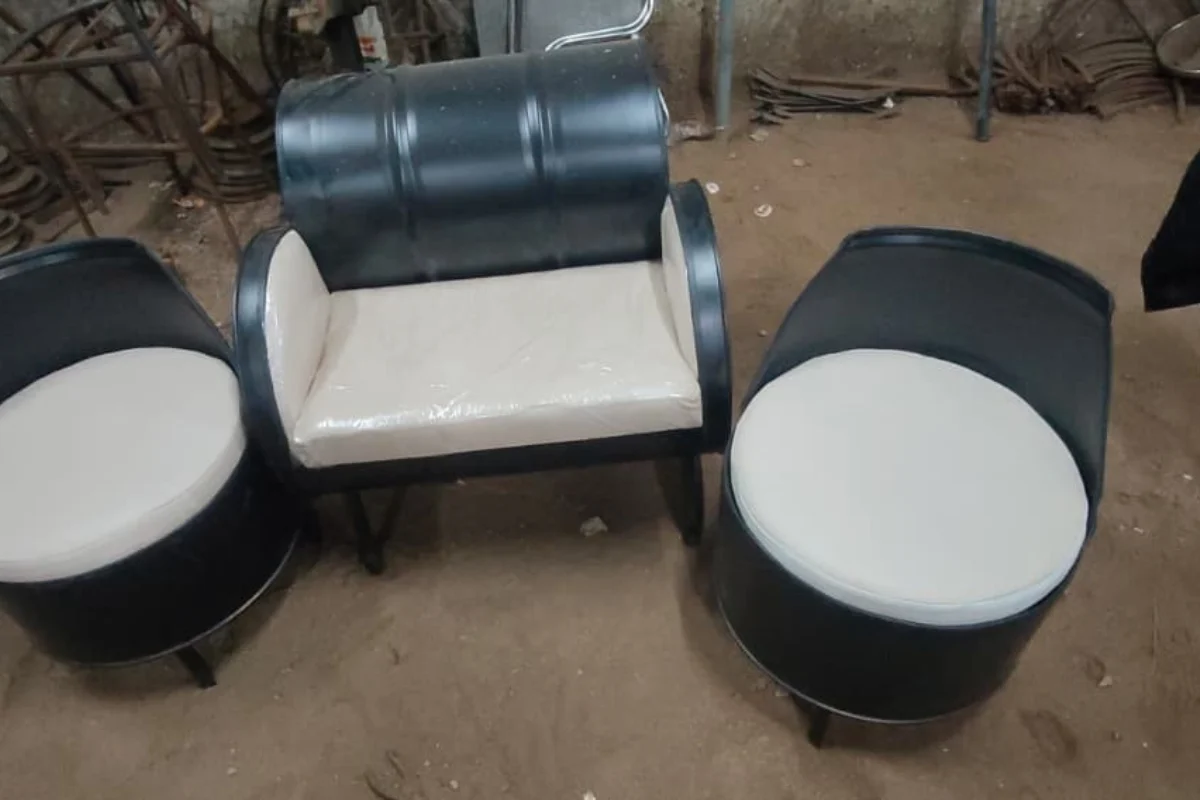
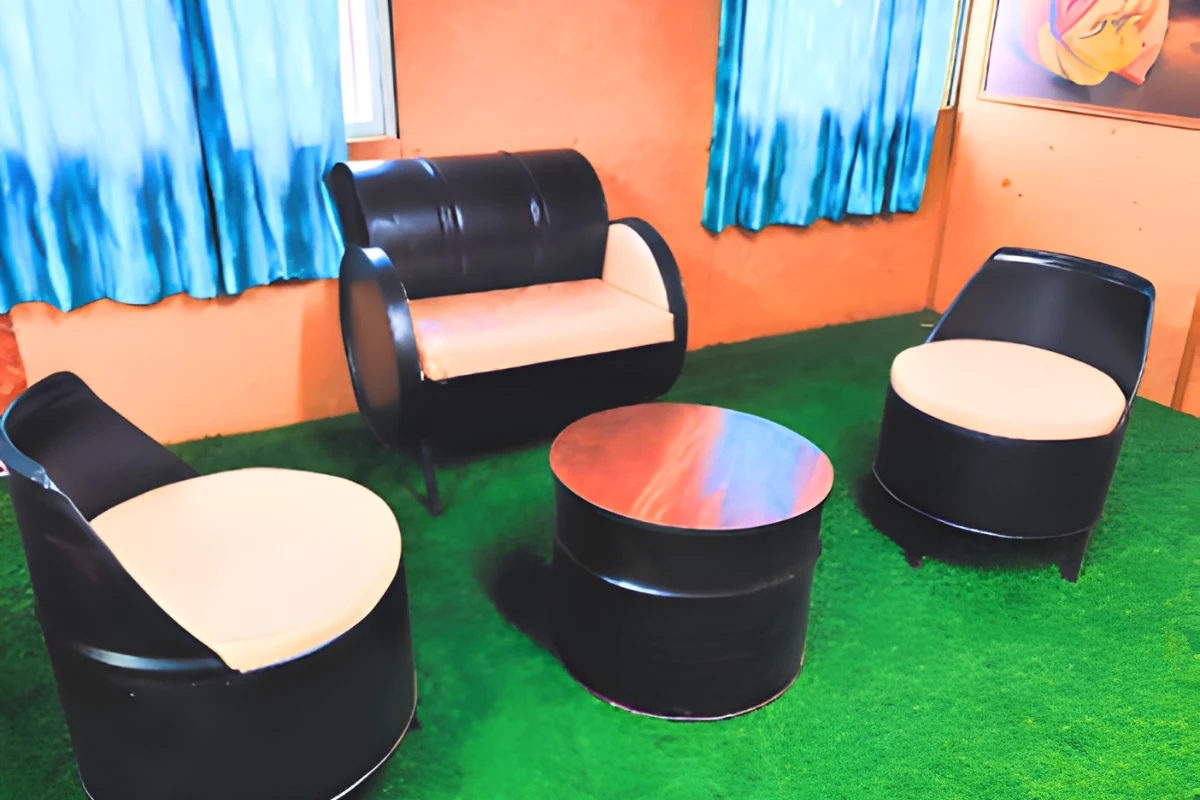
The market response surprised us early on. People did not buy oil drum furniture because it was recycled. They bought it because it was sturdy and looked different. The sustainability story mattered later, not first. This was an important lesson. Livelihoods cannot depend on moral appeal alone. Products must stand on their own merit. Only then does the environmental narrative add value instead of compensating for weakness.
How oil drum furniture creates sustainable livelihoods
From a livelihood perspective, oil drum furniture offers something rare. It creates work that sits between craft and manufacturing. It does not require expensive machinery, but it does require judgement. This makes it suitable for decentralised production. Small workshops. Local teams. Scalable without becoming factory bound or extraction heavy.
There are challenges we continue to navigate. Weight is one. Transport costs eat into margins. Storage takes space. Noise and sparks limit where workshops can operate. These are not minor issues. They shape growth decisions. We have had to say no to orders that would have pushed the system beyond what livelihoods could safely support.
Limits of working with discarded oil drums
Sustainability, in this context, is not a label. It is a result. When a discarded oil drum becomes a table that lasts ten years, material extraction is avoided. When a person earns steady income learning to work with that drum, social value is created. Neither exists without the other. If the livelihood collapses, the material solution collapses with it.
Over time, we have seen confidence change alongside skill. People who once hesitated to touch metal now teach others. They suggest design improvements. They identify material defects before cutting. This ownership keeps the work alive. Not the product catalogue. Not the sustainability language.
Oil drum furniture will never be mass produced in the conventional sense. And that is its strength. Its value lies in controlled scale, skilled hands, and material honesty. Each piece carries marks of its past and the labour of its present. That transparency builds trust with buyers and dignity with makers.
Discarded materials do not automatically become sustainable solutions. They become so only when paired with repeatable, dignified livelihoods. The oil drum taught us that sustainability is not about saving waste. It is about building systems where waste has no reason to exist in the first place, because it already has hands waiting to work with it.