

0
Capsule homes for modern living, hospitality, and institutional applications.
 Institutional Identity
Bamboo House India is an Indian prefabricated construction enterprise founded in 2006. After nearly two decades of pioneering engineered bamboo construction and sustainable building systems, the organization has strategically evolved into the design, manufacture, and deployment of modern capsule homes and modular building systems.
The institution operates as a manufacturing-led enterprise focused on standardized design, factory-based production, and on-site installation rather than conventional site-built construction. Its primary objective is to develop practical, scalable, and durable modular spaces that meet the growing demand for modern prefabricated infrastructure across residential, hospitality, commercial, and institutional sectors.
The organization’s work integrates engineering, product development, precision manufacturing, logistics, installation, and project execution into a unified operating framework. Supported by over two decades of field experience, Bamboo House India continues to develop modular building solutions that combine manufacturing efficiency with practical performance in diverse Indian conditions.
 Structural Context
India’s construction sector is experiencing a growing demand for faster, more predictable, and higher-quality building solutions. Conventional construction is often affected by extended timelines, labour shortages, inconsistent workmanship, cost overruns, and site-dependent execution.
At the same time, sectors such as hospitality, tourism, agriculture, infrastructure, education, healthcare, and industry require functional spaces that can be planned, manufactured, and deployed with greater speed and consistency.
Factory-built modular construction addresses these challenges by shifting a significant portion of the building process from the construction site to a controlled manufacturing environment. Standardized designs, precision fabrication, quality-controlled production, and efficient installation reduce project complexity while improving consistency and execution.
Bamboo House India develops capsule homes and modular building systems that respond to this transition, delivering practical prefabricated spaces designed for India’s diverse climatic conditions and application requirements.
Bamboo House India operates through an integrated manufacturing and project delivery model that combines standardized design, precision production, efficient logistics, and professional installation.
The company develops standardized capsule home designs optimized for structural performance, manufacturing efficiency, and long-term durability.
Every capsule home is manufactured in a controlled production environment using standardized processes, and quality-controlled assembly, minimizing site dependency, improving consistency, enabling better quality control throughout the production cycle.
Completed modules are transported to the project location and installed using a structured execution process. The company coordinates manufacturing, logistics, site preparation, installation, to ensure efficient project delivery across India.
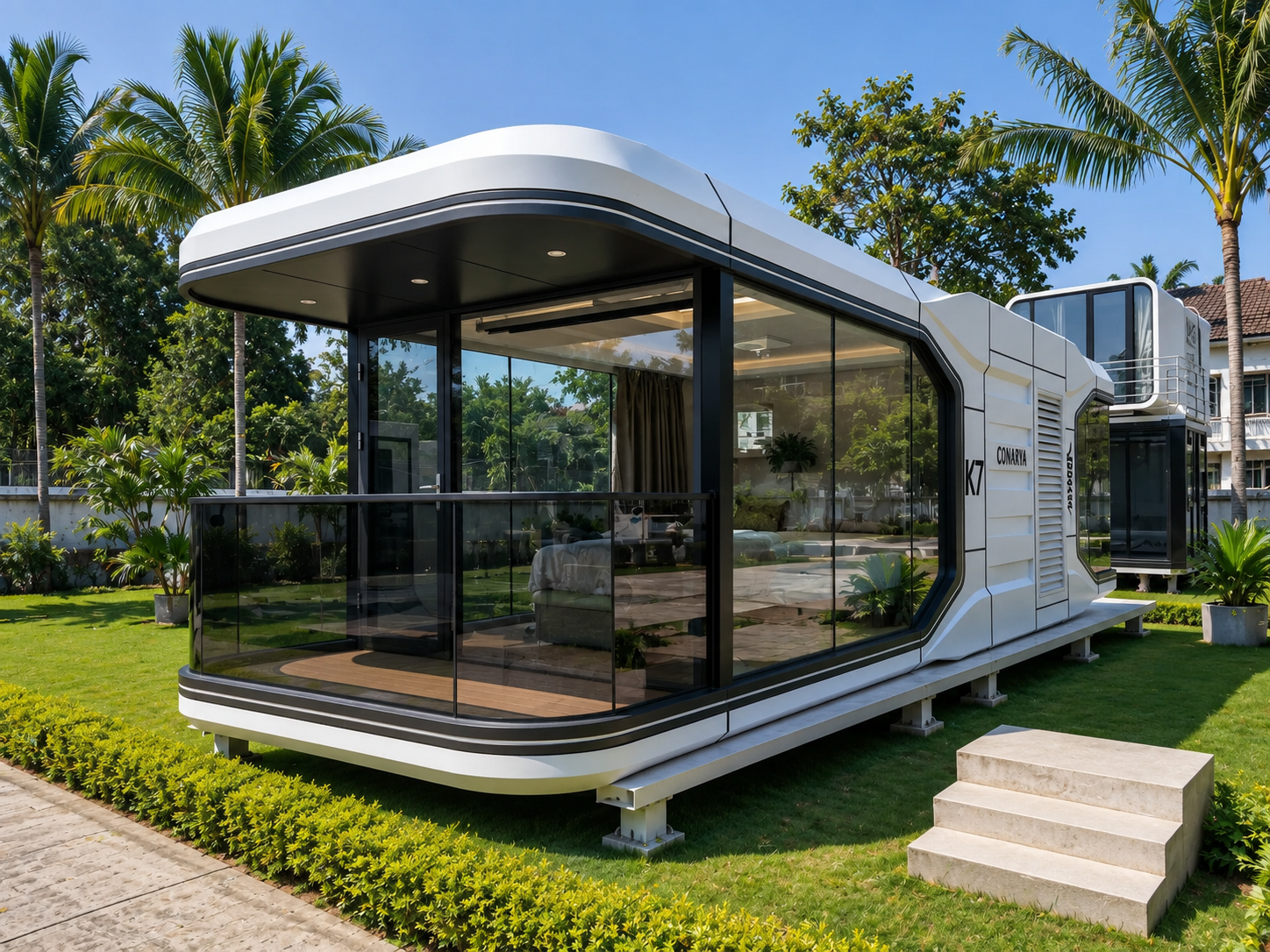
Operational principles embedded in every capsule house we develop.

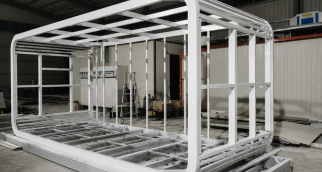
Bamboo House India develops and manufactures standardized modular building solutions across defined product categories:
Each category is developed using standardized engineering, factory-based manufacturing, and quality-controlled production processes. The objective is not product diversification but the delivery of reliable modular building systems that maintain consistency across multiple applications.

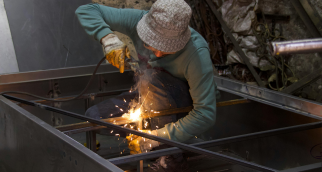
Bamboo House India is a manufacturing-led prefabricated construction enterprise specializing in capsule homes and modular building systems. The organization combines product engineering, standardized manufacturing, logistics, installation, and project execution within a single integrated delivery model.
Rather than operating as a conventional construction contractor, the company manufactures buildings in a controlled factory environment and deploys them efficiently across diverse project locations. Its emphasis is on standardization, precision manufacturing, predictable quality, and practical solutions that address the evolving needs of residential, hospitality, commercial, and institutional sectors.

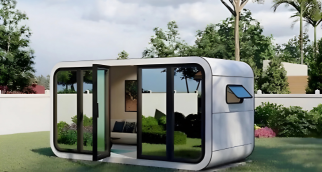
Bamboo House India’s current focus includes:
The organization is committed to developing practical modular building systems that combine engineering excellence, manufacturing efficiency, and long-term performance for projects across India.
The institutional framework of Bamboo House India is built upon the practice-led engineering, manufacturing, and field experience of Prashant Lingam and Aruna Lingam.
Over nearly two decades, the founders developed and implemented prefabricated housing, institutional infrastructure, and sustainable building projects. Today, Bamboo House India serves as the execution platform through which its standardized capsule homes are designed, manufactured, installed, across India.
Name: Bamboo House India
Established: 2006
Geography: India
Type: Prefabricated Construction and Modular Housing Enterprise
Primary Domain: Capsule Homes and Modular Building Systems
Core Expertise: Design, Manufacturing, Installation, and Delivery
Operating Model: Standardized Design • Factory Manufacturing • On-Site Installation
Practice Origin: Developed through the work of Prashant Lingam and Aruna Lingam