
Description
Description
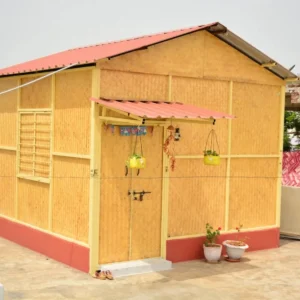
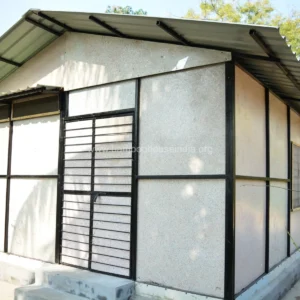
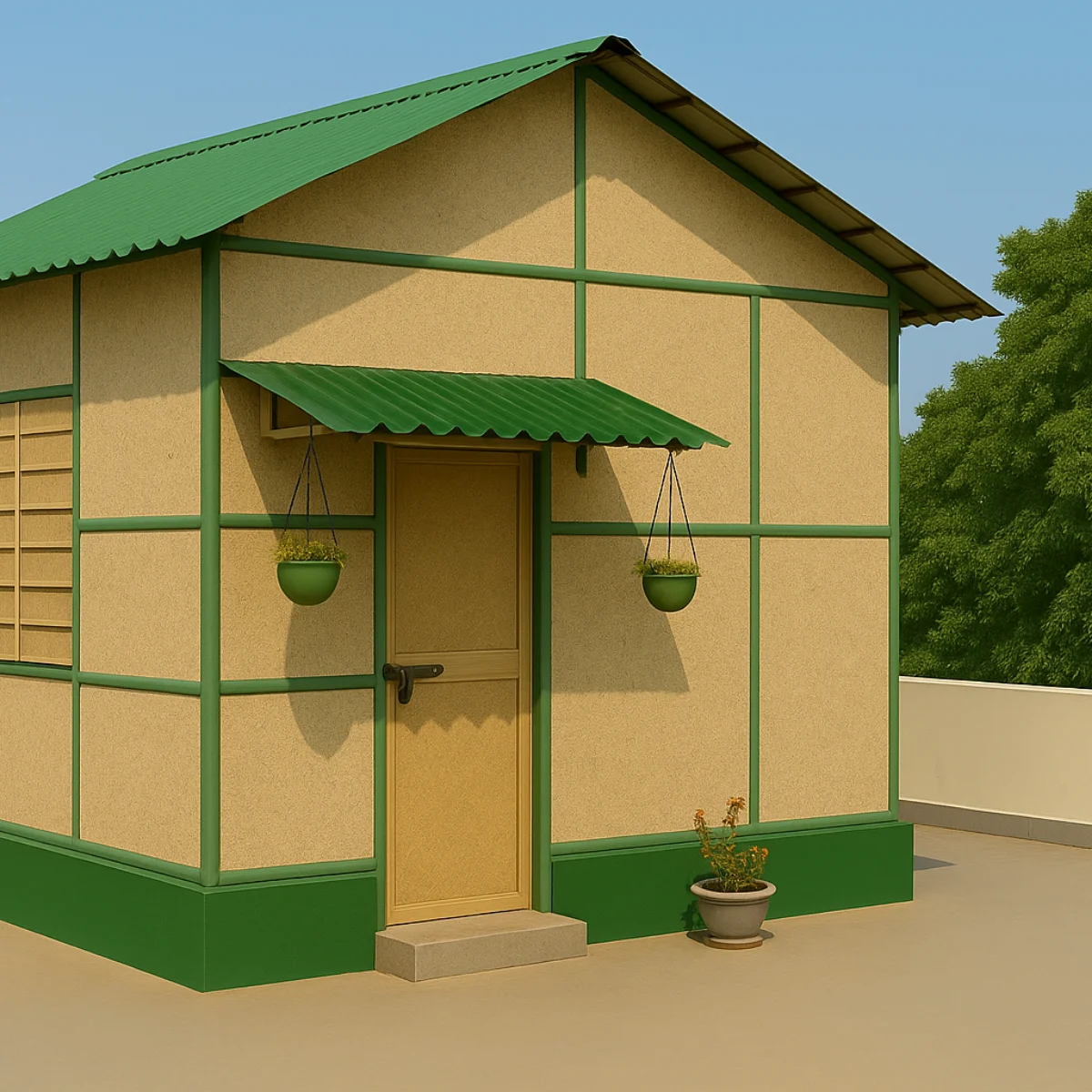
Agricultural residue housing is a sustainable, low-carbon construction solution made from compressed crop residue panels such as rice husk, wheat straw, sugarcane bagasse, and other farm by-products. These houses convert agricultural waste — which is usually burned and contributes to air pollution — into durable, high-performance building materials.
Each unit is designed and assembled under Bamboo House India’s circular construction programs, ensuring rapid deployment, strong thermal performance, and long-term structural stability. These houses are ideally suited for rural housing, farm stays, community infrastructure etc.
This product is offered to individual B2B / project-based solution, with full customization based on layout, size, and end-use.
Key Features:
• Built from compressed agricultural residue panels
• Excellent thermal insulation — cooler interiors in summer, warmer in winter
• Fire-resistant, termite-resistant, and structurally stable
• Lightweight yet durable construction
• Quick installation with modular panel systems
• Reduced carbon footprint and zero burning of farm waste
• Suitable for housing, classrooms, farm structures, offices, health units
• Supports circular livelihoods and regenerative rural economies
Dimensions & Specifications:
• Fully customizable — typical unit sizes range from 200 sq. ft. to 1,00,000+ sq. ft.
• Wall thickness and panel composition based on project needs
• Multiple roofing options (GI sheet, insulated panels, composite systems)
• Lifespan: 15–20+ years depending on environment and maintenance
(Technical datasheets available during project consultation.)
Order Information:
• Available for B2B, institutional, CSR, and government projects
• Minimum order: 1 custom-built unit
• Pricing depends on size, panel specifications, and installation location
• On-site installation support available
• Custom interior layouts, windows, doors, utilities integration available
Sustainability Impact:
Each agricultural residue house prevents open field burning of crop waste, reduces greenhouse emissions, and supports circular rural economies. It converts farm by-products into durable construction materials while creating green jobs for local communities.